One of the key decisions in wedding planning is choosing how your food will be served. The serving style dictates the guest experience, the flow of your reception, and, most importantly, the budget.
Here is a quick guide outlining the pros and cons of the three main service styles to help you make the perfect choice for your big day.
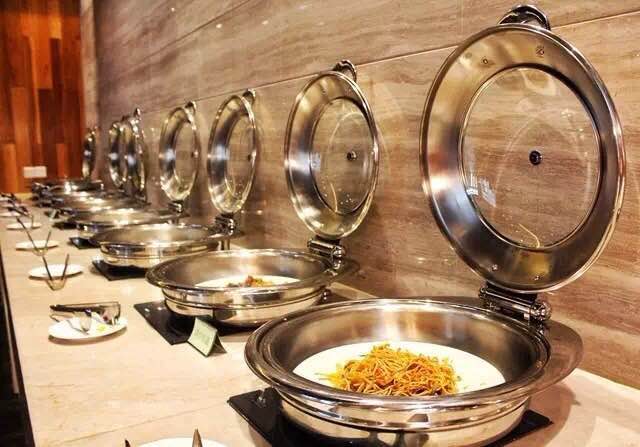
Buffet
Pros:
- Guests have the most variety and can choose portion sizes based on their preference.
- Typically the cheapest option as it requires fewer servers than plated service.
Cons:
- Guests must stand and queue, which can be slow and interrupt table conversations.
- Can create noise and disruption in the dining area as people move back and forth.
- Visual Clutter: The setup may require significant space and can be less formal than other options.
Tip: If your venue allows, place the buffet in a separate room or adjacent area. This ensures the line and the movement of guests don't interrupt the tables that are currently eating or enjoying your event.
Lazy Susan
This refers to the type of serving that consists of bowls of food on individual tables. They sometimes sit on a glass turntable of sorts.
Pros:
- Guests get choice and variety without ever leaving their seats.
- Space Constraints: Requires ample table space for the serving bowls and plates, which can limit table decor.
- Allows for simultaneous events like speeches or games, as no guests are away from their tables.
- Social & Communal: Encourages interaction as guests pass dishes to one another.
Cons:
- Temperature Issues: Food can cool down easily if not served immediately or if the meal takes a long time.
- Limited Menu: The menu must be simple enough to be passed and self-served, and the table size restricts the total number of dishes.
Tips:
- Consider the table size and the number of bowls to avoid overcrowding
- You will need to emphasise to your caterer to ensure:
- That the bowls contain enough food for the table size.
- That the food comes out in a timely fashion
- All the bowls per table come closely together to ensure that a table can begin to eat.
Sit Down
Pros:
- Considered the most refined and high-end option for a wedding.
- Highest Cost: Requires a large number of skilled servers, significantly increasing staffing costs.
- Guests never have to stand up or worry about serving themselves.
- Predictable Timing: Offers the most precise control over when the meal starts and ends, which is great for scheduling events
Cons:
- This option will most likely give your guests the most limited option.
- The increased cost due to staff cost, as you will need more servers to ensure timely serving
- Limited Choice: Guests usually have the most limited menu selection (often a choice between two main courses).
- Slower Pace: If not executed perfectly, serving hundreds of plates can be slow and feel delayed for some tables.
Tips:
- If possible, get guests to choose their food prior to the event.
- If the above is not possible, ensure the menus are highly visible and that the waiters are skilled in taking orders.