


This blog offers essential tips on key elements you’ll need to consider to plan your Yoruba traditional wedding successfully.
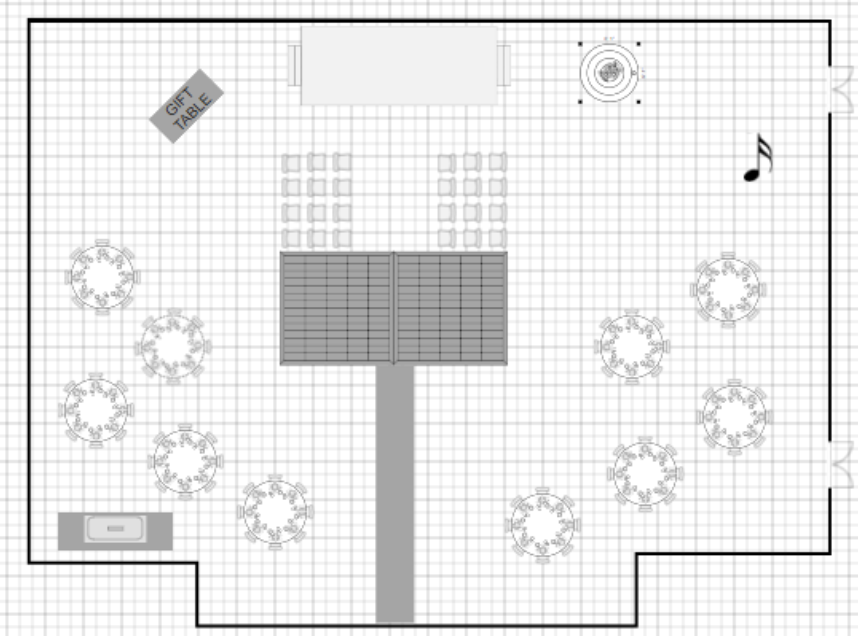
The structure of the traditional ceremony revolves around the two families formally facing each other. The bride's family and the groom's family must be seated facing one another, with a significant aisle or gap in between for the proceedings and the bride's entrance. Most Nigerian decorators know this key layout, but always confirm this specific seating plan.
Ensure the gift table and cake table are easily accessible to the main family seating area, as the couple will need easy to access to them.
Tip: To maximise space and efficiency, use the chairs for the two family tables (the primary seated area) to create the central portion of the layout. Once the formal ceremony is complete, these chairs can be moved back to the original tables, reducing the need for extra inventory and ensuring family members have a designated table for the reception part of the event.
The Alaga (often a woman, known as Alaga Iduro or Alaga Ijoko) is the undisputed key to the event's success. They act as a lively, family representative and moderator, handling all the necessary theatricals and traditional protocols.
Crucially, you must communicate your desired length and style of the ceremony to the Alaga. A traditional can be as short or as extensive as you wish.
If the couple do not understand Yoruba, make sure you brief the Alaga to be mindful of this and ask her to explain key segments in English when possible.
Also, Alagas typically work closely with talking drummers for cultural richness and razzmatazz.
Tip: To reduce vendor costs, consider hiring one Alaga to represent both the bride’s and groom’s families, rather than one for each side.
Find alagas here
The presentation of gifts from the groom’s family to the bride's family (Eru Iyawo) is a crucial moment, symbolising the groom's capability and commitment.
These beautifully wrapped gifts and hampers often contain crates of drinks, jewelry, decanters, and food items, and they naturally serve as a significant part of your décor.
The Bible Tradition: For Christian families, a Bible is usually included. The bride is typically asked to "pick" the gift she desires most, and she traditionally selects the Bible.
Vendor Tip: If sourcing and wrapping the many required items sounds overwhelming, note that some Alagas provide a gift buying and wrapping service, simplifying the process significantly.
While not every element is mandatory, the cake and food are central to Yoruba Traditional.
Tip: Google/Pinterest Nigerian cakes for some inspiration
The Aso-Ebi (translated as family cloth) results in those iconic, synchronised photos where family and friends wear matching fabric.
You can opt for just a single color scheme for guests, or ask female attendees to wear a matching gele (head-tie) instead of a matching fabric.
If You Choose Aso-Ebi:
Tip: There are services that manage the whole process, please email us for recommendations or use services like Simpy Asoebi
A live band is the traditional choice for Nigerian engagements. However, depending on your family's preferences and your budget, a DJ (or a combination of both) might be a more suitable choice.
If you are combining the Introduction ceremony with the Traditional Engagement, a beautifully decorated letter (often presented in a glass or framed format) is typically read aloud by a female family member of the bride, formally accepting the proposal.